
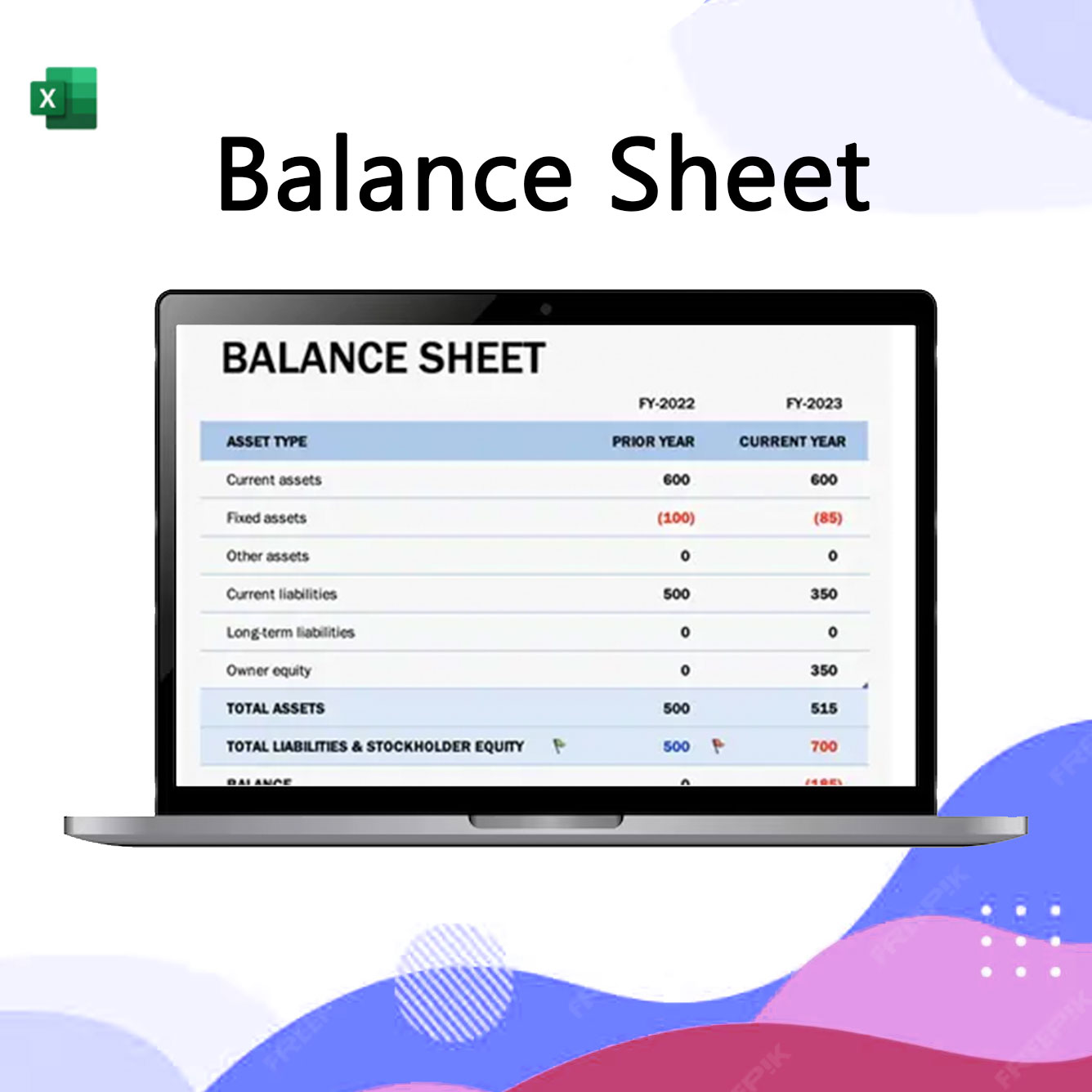
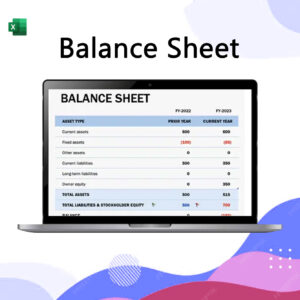
A standard Balance Sheet mockup in Excel follows the fundamental accounting equation, Assets = Liabilities + Shareholders’ Equity, typically organized into two main columns or a vertical list for clarity. The Assets section should be categorized into Current Assets (e.g., Cash, Accounts Receivable, Inventory) and Non-current Assets (e.g., PP&E, Intangible Assets), while the Liabilities section breaks down into Current (e.g., Accounts Payable, Accrued Expenses) and Long-term debt. The Equity portion captures Common Stock and Retained Earnings, ensuring that the final “Total Assets” figure perfectly matches the “Total Liabilities and Equity” through a checksum formula like =SUM(Total_Liabilities, Total_Equity) - Total_Assets to immediately flag any data entry imbalances.
Balance Sheet
฿10.00
& Free ShippingA standard Balance Sheet mockup in Excel follows the fundamental accounting equation, Assets = Liabilities + Shareholders’ Equity, typically organized into two main columns or a vertical list for clarity. The Assets section should be categorized into Current Assets (e.g., Cash, Accounts Receivable, Inventory) and Non-current Assets (e.g., PP&E, Intangible Assets), while the Liabilities section breaks down into Current (e.g., Accounts Payable, Accrued Expenses) and Long-term debt. The Equity portion captures Common Stock and Retained Earnings, ensuring that the final “Total Assets” figure perfectly matches the “Total Liabilities and Equity” through a checksum formula like =SUM(Total_Liabilities, Total_Equity) - Total_Assets to immediately flag any data entry imbalances.
Reviews
There are no reviews yet.